Published May 8, 2025 11:01 AM IST
Chaim V’Chessed has taken steps to address a critical gap in the newly launched Tzedek Tachburati transportation discount program, recently unveiled by Israel’s Ministry of Transportation.
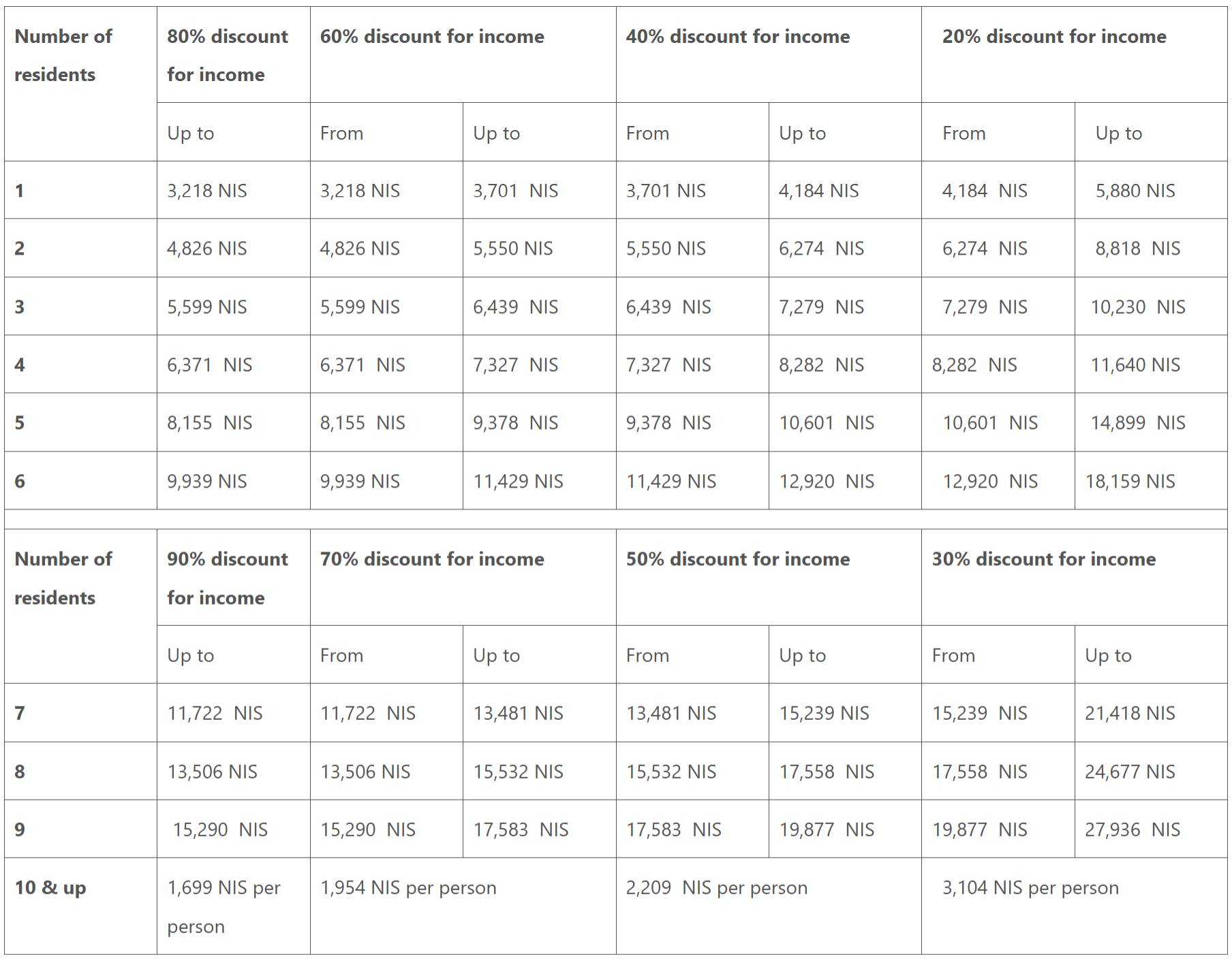
The innovative program offers significant public transportation discounts based on a traveler’s place of residence, helping ease the financial burden on individuals living in various geographic and socio-economic areas across the country. However, the eligibility mechanism for the program presents an obstacle for a unique segment of the population: residents of Israel who are not Israeli citizens.
The current system verifies residency through the sefach – the address printed on a teudat zehut (Israeli ID card), which non-citizens do not possess. As such, although they are eligible according to the regulations, they currently have no way to prove their residency and access the discounts.
Chaim V’Chessed’s team of experts reviewed the official government regulations behind the program and discovered a key point: the language of the law refers to the eligibility of a nosea – a traveler – without making any distinction between citizens and non-citizen residents. This understanding clearly supports the inclusion of non-citizen residents in the program.
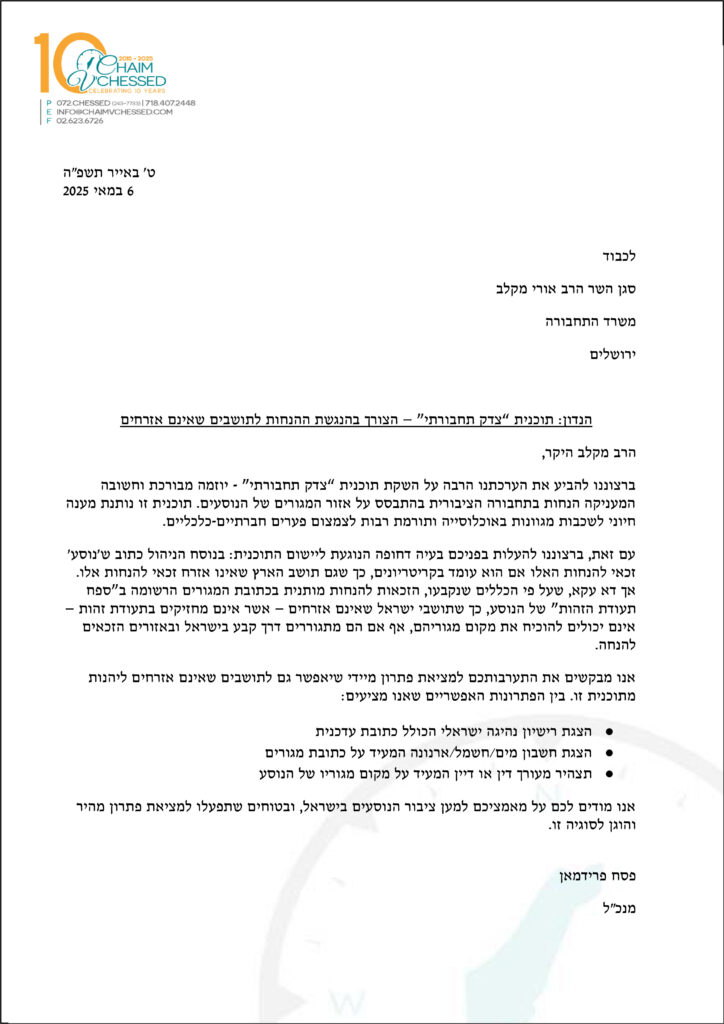
In a formal appeal to Deputy Minister of Transportation Rabbi Uri Maklev, Chaim V’Chessed outlined this discrepancy and proposed a series of practical solutions. These include accepting alternate forms of address verification, such as:
- An Israeli driver’s license with a local address
- A utility bill in the traveler’s name (e.g., Arnona, water, or electric)
- An affidavit signed by a licensed attorney certifying the individual’s Israeli address
Chaim V’Chessed commended the Ministry for the Tzedek Tachburati program, noting the positive impact it is already having on a broad range of the population. At the same time, the organization emphasized the urgency of ensuring that non-citizen residents – such as foreign students, families of olim, and long-term visa holders — are not inadvertently excluded from the program’s benefits.
At the present time, at Maklev’s behest, Ministry of Transportation officials are studying the solutions proposed by Chaim V’Chessed. As always, Chaim V’Chessed remains committed to advocating on behalf of the English-speaking community in Israel and ensuring equitable access to vital public services.